I really enjoy reading Bijan's posts. They are very insightful, and, since there are mutual interests (consumer-facing tech, music and mobile) many times the advice or view given in his posts applies directly to me.
This morning's post is a good example: Take Control over your destiny. To summarize (I recommend reading the original post), try to control your dependencies on operators and OEMs on direct consumer plays, as much as you can.
Here's my thoughts on the topic:
I couldn't agree more, wouldn't that be terrific. However in some cases, the operators and OEMs control a critical piece to be worked around. I'm not suggesting employing a full-time BD guy to be in front of operators and OEMs, but you better be able to leverage the assets they own well. Let me give two examples: Mobile Payments and Mobile Enabling Technologies (from barcodes to speech-driven 'activities').
In the case of Mobile payments, the operators *own* the critical bits that allow for acceptable user experience. At least as it comes to mobile web (mobile apps are different). I hate to admit, but the Paypal/Amazon/Google checkout are simply not as friendly as the 1-click WAP checkout button that results in an on-bill transaction, that's been deployed and heavily used in the UK for years now. The UK operators realized the need and potential, and gathered to create a solution called PayForIt. I believe that every startup that wants to see mobile commerce on mobile web has a real problem exactly because of that.
Similarly, mobile enabling technologies have been proven to drive revenues through increased usage, device and plan sales. Enabling technologies, IMO, aren't best positioned on the device as a silo application. They really should be preloaded as an infrastructure background service with APIs to any application: then, let the user search the web using speech browser, play games and dictate. Use barcodes (or google goggles) to scan a real-world item and embed as recommendation to a friend in your FB app. Things like that. Getting preloaded, or embedded as infrastructure layer, as we know, is a pretty complex OEM play.
In some mobile consumer app plays you can provide a good service without heavy dependency on operators and OEMs, but not all. My 2 cents.
Showing posts with label Mobile. Show all posts
Showing posts with label Mobile. Show all posts
Thursday, February 11, 2010


Tuesday, November 17, 2009
Geeky wishes...
I wish...
- There was a free way to do mobile carrier lookup from a mobile number. That way I could enable people on mobile web pages to share their favorite sites with their friends in a rifle mode (the shotgun approach is easily supported via Twitter). It cost way too much to do a carrier lookup and then send the SMS. Operators should want this more than me, because when I'll send that SMS, I will pay to send it, and the receiver will pay ~$.10 to receive it.
- There was a way to find location on mobile web pages for all phone types, not restricted to whether those devices have GPS or not (cellid or wifi router mac address is better than nothing). OEMs should want this more than me, because it opens a sea of marketing opportunities for them.
- There was a simple, easy way to bill people off-deck, from an app or mobile web pages. The current on and off-deck billing solutions in the US are unusable. Every time I hear news from the UK about PayForIt I become green with envy. If there's such a successful model, why can't the US replicate it?! *everyone* in the mobile space should want this. This morning GoPayforit announced that it lets vendors set up a payment service for their site by inserting one line of code.
If I got any of the above wrong, feel free to educate me!
Thursday, October 22, 2009
Mobile Location is here (now for real)

In the last couple weeks I've been playing around with new mobile technology. This time, I came across this nice piece that enables marketers to learn their audience location as they view their mobile web pages.
Mobile location, it seems, has been the talk of the industry forever. Devices that don't come out with GPS chips installed seem to be the minority these days. Many applications have some form of mobile location awareness to them. Even Google has stormed in with Google Latitude, although the availability of that database for commercial purposes remains unclear. Has the real time location awareness made a dent in how marketers think of entering the mobile playground? questionable, I think.
One reason for not making a dent is that the effort associated in creating a mobile application is not insignificant. You need to consider coverage, features, maintenance etc. There's not an obvious easy entry point for marketers to test the ('mobile') water if the options are limited to mobile applications. If users' location were available on the mobile web, then with the development of a small portal, marketers can get huge reach instantly, and figure out the next step.
It seems that the technology is becoming available to create location-aware websites, and more specifically, location-aware mobile websites. I am hoping that this will really open a new path for marketers that wasn't available before, it is certainly an exciting opportunity for innovation!
Wednesday, October 21, 2009
New England Mobile Sector
As I read XConomy's post on the top 10 NE Venture deals of Q3'09, all I can do is remember that only this last Monday, at Mobile Monday, I was inside a room full of mobile entrepreneurs, money people, business people and what not, everyone saying: Mobile in Boston is reality, look around you.
Well, maybe we can argue that there are people working in the mobile space in NE, trying to make a difference and make miracles happen, but at the bottom line, money talks:
NE ventures are about science projects, or late-stage successful businesses. Numerous NE VCs are uncomfortable about investing in mobile, as are the early stage angels and independents. They need infrastructure, health, IP, enterprise. That works.
Maybe it's a way to ensure mobile businesses in NE are stronger (whatever that means) because there are fewer who can survive w/o funding. Or otherwise, if you want mobile, go west.
Well, maybe we can argue that there are people working in the mobile space in NE, trying to make a difference and make miracles happen, but at the bottom line, money talks:
NE ventures are about science projects, or late-stage successful businesses. Numerous NE VCs are uncomfortable about investing in mobile, as are the early stage angels and independents. They need infrastructure, health, IP, enterprise. That works.
Maybe it's a way to ensure mobile businesses in NE are stronger (whatever that means) because there are fewer who can survive w/o funding. Or otherwise, if you want mobile, go west.
Monday, May 11, 2009
New Ad-supported MVNO: Tomato Plus
I'm reading this morning about Tomato Plus, a new Ad-supported MVNO in Croatia. Those of you reading my posts know that I'm a believer in a change of the business model to have advertisers pay for targeting information happily provided by subscribers, who get value in return.
Read more here.
Friday, February 27, 2009
Run Your Life With SMS: 10 Things You Didn’t Know You Could Do Via Text
"Mobile Maven" (indeed!) Helen Andreson has this great post on 10 (useful, for a change) things you can do using text messages. Well worth reading!
Saturday, January 31, 2009
Next time I propose an SMS-based service in the US, slap me!
This is a rant-post about trying to build an SMS-based service in the US. You may say "Oh, this doesn't apply to me", but the bottom line of this is, whatever you do, if you need approval from the carriers in the US, IT DOES APPLY TO YOU.
To put into perspective, I'm building a "Standard Rate", "Dedicated Shortcode", "Multi-Program" service. (If you are interested in the details, visit the MMA site, they really do a great job at facilitating sanity in the Mobile Marketing space).
We needed to use SMS because we wanted to enable subscribers to interact with the service. to initiate and respond. Mobile email, specifically in the US, has taken off well, considering (avoiding the tangent), even with non-enterprise subscribers. The cost of email is obviosly more attractive than SMS. but not everyone is connected to mobile email, so depending on your target market demographics, you end up needing to use (and pay) SMS.
We've re-discovered that when building an SMS based service, you'll see the following:
IMO, the process, cost and issues involved with SMS suggest that it's time has passed. We need to move on to find alternatives (see RIM's BB-to-BB IM solution, works completely independent of carriers and doesn't cost them a cent) for the mass crowds that would make sense to the crowds, the marketers and the carriers.
I'll just mention that I don't think this is unique to the aggregator I'm working with. I've worked with 2 others in the last 3 years, and had seen the exact same issues for US deployments.
To put into perspective, I'm building a "Standard Rate", "Dedicated Shortcode", "Multi-Program" service. (If you are interested in the details, visit the MMA site, they really do a great job at facilitating sanity in the Mobile Marketing space).
We needed to use SMS because we wanted to enable subscribers to interact with the service. to initiate and respond. Mobile email, specifically in the US, has taken off well, considering (avoiding the tangent), even with non-enterprise subscribers. The cost of email is obviosly more attractive than SMS. but not everyone is connected to mobile email, so depending on your target market demographics, you end up needing to use (and pay) SMS.
We've re-discovered that when building an SMS based service, you'll see the following:
- Cost of SMS is unreasonable
- You'll pay a few cents/SMS, couple grand/month for the service of the mobile SMS aggregator, and then couple grand more to USShortcodes/Neustar (in case you're using a dedicated shortcode).
- Guess what? it's going to get worse: Verizon already announced their intention to raise the cost of sending an SMS to almost double. Guess what will be the reaction by the rest of the carriers.
- The process of provisioning a dedicated shortcode is, of course, a few months, so plan on paying the above cost for a few months in a row before you can even claim you're live on the 4 tier-1's (Verizon, AT&T, Spring & T-Mobile).
- The process of approving an SMS-based program is unreasonable
- It's not a cookie-cutter: You'd think that whatever your program looks like, carriers and SMS aggregators done it a gazillion times. Think again. I don't know if there truly is a daily change in the operator guidelines, a heightened sensitivity or a job security thing. What I know is that my program looks to me like one that I know good and respectable players are using, and I'm surprised to hear new rules and guidelines daily.
- You may need to operate two systems in the process: Do you have the service already running on a shared shortcode and trying to move over? You now need to keep serving your audience, and of course, in parallel, allow the carriers to test your service on the new shortcode.
Carriers have this two-step certification+provisioning process. Certification means you can send and receive SMSs using the new dedicated shortcode, but please don't go commercial on it. Provisioning means the new dedicated shortcode is approved.
Practically, you're trying to ramp up a business, so you're saying, I've got only a handful of users, I'll respond to their SMSs through the certified (but not provisioned) dedicated shortcode. That works well until one of the carriers sets a "White list", meaning only certain phones (which you, of course, don't know) will be able to interact with the certified shortcode. Go figure who sent you an SMS from the old shared shortcode (and respond from it) and who sent you an SMS from the certified shortcode, and respond from there. F-U-N! - The rules are set by the extreme carrier and thus, are unreasonable: Let me take you down one scenario. You have two programs running, involving standard subscription. Let's say there's a fan club for Shakira and a fan club for Aceyalone. A subscriber joins both fan clubs, and maybe more. The reasonable thing to do, is to tell that subscriber: if you want to opt-out of one club, do this, or if you want to opt-out of ALL programs, do that.
That sense didn't work for one of the carriers, who demanded we promote only the word "STOP", which is an opt-out from all command. This obviously led to a waterfall of wrong workarounds. Here's one not-funny one: When the subscriber sends "STOP", send them an SMS back, telling them they're sub'd to several channels, and they need to send either "STOP ALL" or "List" to view their subscriptions. First, this will never fly as this changes the meaning of the fundamental command "STOP". But second, let's say that (poor) subscriber is sub'd to 10 or more programs. In a 160-character SMS, they might get more than a few SMSs back with their subscriptions and instructions. OH THAT MAKES A LOT OF SENSE: You wanted to STOP, and in return you're getting all those SMSs, on your budget. NOT FUNNY.
IMO, the process, cost and issues involved with SMS suggest that it's time has passed. We need to move on to find alternatives (see RIM's BB-to-BB IM solution, works completely independent of carriers and doesn't cost them a cent) for the mass crowds that would make sense to the crowds, the marketers and the carriers.
I'll just mention that I don't think this is unique to the aggregator I'm working with. I've worked with 2 others in the last 3 years, and had seen the exact same issues for US deployments.
Monday, November 24, 2008
SMS cost a concern in FB buying Twitter
imagine FB did buy Twitter and really dig into their mobile strategy. How cool would that be.
Here's one reason it probably would not happen:
"Twitter pays for users' messages to be sent to cellphones. If Facebook were to offer the service to its 120 million members, that could be quite an SMS bill for the social net to deal with" (Source)
We need a new mobile alert solution. SMS is not it.
Here's one reason it probably would not happen:
"Twitter pays for users' messages to be sent to cellphones. If Facebook were to offer the service to its 120 million members, that could be quite an SMS bill for the social net to deal with" (Source)
We need a new mobile alert solution. SMS is not it.
Saturday, November 1, 2008
Help yourself to those cuffs
Those of you who know me or follow this blog, know what I think of US operators and what that means for a US Mobile startup. Let's say I wasn't surprised by IDG giving $12M to mobile IVR player Mobivox.
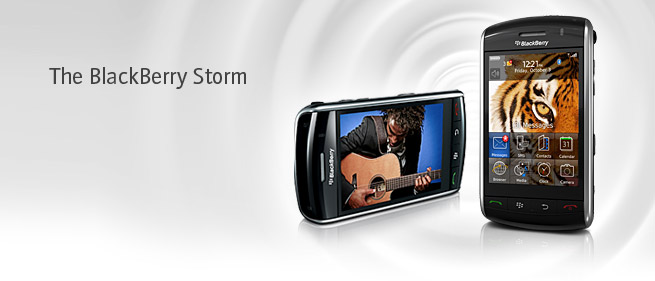
The following Verizon brief, then, seems only natural. Not that I'm a big Android or T-Mobile fan but I truly think you should highlight your advantages, not play your opponent's downsides. Following that thought, it would be only natural to see Verizon disabling Blackberry Storm's WiFi feature. I could only wish subscribers would start opening their eyes and give power to those who really care about them.
Read my lips: Verizon's 3-cents SMS story is not over.

The following Verizon brief, then, seems only natural. Not that I'm a big Android or T-Mobile fan but I truly think you should highlight your advantages, not play your opponent's downsides. Following that thought, it would be only natural to see Verizon disabling Blackberry Storm's WiFi feature. I could only wish subscribers would start opening their eyes and give power to those who really care about them.
Read my lips: Verizon's 3-cents SMS story is not over.
Saturday, October 11, 2008
Thursday, August 14, 2008
How to stop the evolution of an ecosystem

I thought of a good name for this post, because it just so happens I just read a few blogs talking about the Twitter SMS mess. Frankly, I feel sorry for Tweeter: not that they couldn't handle it better, it's just that I did the math a couple weeks ago:
Each MT SMS is between $0.04-$0.01 for high volumes. Add $1K-$2K "connectivity" and add the fun $500-$1,000/month for shortcodes.
Set your revenue at $5 CPM, maybe $0.1 CPC, and you'll get a nice little equation that in a visit depth of 2 (mobile) pages/visit, you may be loosing $0.03 per message.
Nice.
So I'm sure there's plenty of ways for a web+mobile service to leverage web advertising or sales, however the above equation makes it tough for emerging mobile startups to enter this market, which is good if you're in, bad if you're not.
That's the startup side. what's the operator side? Operators are making $ every time an SMS is being sent by the subscriber, or to the subscriber, from the subscriber. Typically operators would charge subscribers $0.10 - $0.25 per SMS if you don't have it in your plan, or $5-$10 for a package of 200 messages. As mentioned above, operators also make money when a service sends an SMS to the subscriber (MT).
So let's see...the service pays the operator while really the service is a revenue generator for the operator.
To some degree I agree with people saying "kill the SMS" as the 160-chars economics make no sense compared to data plans that will be introduced to the sea of iPhone and Blackberries and the likes.
Give us Email-like economics (and richness) and the immediacy nature of SMS, please.
The good news for now, if you get to the messaging volume that Twitter generates, some operators will pay you to be in business. Until then, sweet dreams...
Sunday, August 10, 2008
I want one: TMO UK Launches 3G Blackberry Bold

(3G) UK : T-Mobile announced an expansion of its BlackBerry smartphone portfolio with the launch of the BlackBerry Bold smartphone from Research In Motion (RIM), which will be available in shops and online from September 2008.
The BlackBerry Bold features a premium design and unprecedented performance to increase the ability of T-Mobile customers to work effectively whilst away from the office. As the first BlackBerry smartphone available from T-Mobile to support 3G (HSDPA) networks, the BlackBerry Bold allows business users to download email attachments, stream video or render web pages more quickly than ever before. T-Mobile's 3G network coverage is among the best in the UK and will provide almost complete population coverage by 2009 as a result of the innovative 3G radio access network sharing agreement with 3 UK
For additional high-speed network coverage, the BlackBerry Bold smartphone supports the 802.11 a/b/g Wi-Fi® standards. It is also the first BlackBerry smartphone to support tri-band HSDPA high-speed networks around the world, including the Far East.
With this powerful new smartphone, users can talk on the phone while sending and receiving email or accessing the web, and the BlackBerry Bold also allows users to download Word, Excel or PowerPoint email attachments and edit them directly on the handset with the preinstalled DataViz® Documents to Go® software suite “ a great advantage for those working on the go. The BlackBerry Bold also comes with a 2 megapixel camera that supports video capture and a media player for taking entertainment on the go. It includes 1 GB of on-board storage memory, as well as a microSD/SDHC memory card slot for additional storage of music, video, pictures and office documents*.
The BlackBerry Bold will be available to all T-Mobile Business 1-Plan customers. The Business 1-Plan tariff enables companies to reap more value from their mobile communications investment by building a truly flexible allowance of voice, data, texts and international calls “ removing the complexity of surrounding costs by providing one simple plan tailored to meet the user's mobile communication needs.
Business 1-Plan includes calls from the UK to Europe and North America as T-Mobile recognises that many business transactions are no longer confined to the UK.
Oliver Chivers, Head of Business Marketing, T-Mobile UK, said: As greater number of businesses recognise the benefits of mobile working, demand for mobile broadband connectivity speeds is escalating rapidly. T-Mobile customers using the BlackBerry Bold smartphone will have access to one of the most innovative mobile business devices on the market supported by a network that independent tests reveal delivers a superior mobile broadband experience. For the business world, this translates into opportunities to extend the boundaries of productivity and efficiency."
The BlackBerry Bold also features integrated GPS with support for location based applications and services such as satellite navigation with local search capabilities, a valuable tool for remote and mobile workers traveling to a meeting at a new venue or for locating the nearest petrol station. It also features Bluetooth® 2.0, with support for hands-free headsets, stereo headsets, car kits and other Bluetooth peripherals
Adding to its wealth of functionality, the BlackBerry Bold provides access to email (including attachment viewing), text and instant messaging, organiser, web and other mobile applications. Chivers adds: We already know that business users are incrediblyenamoured with the capabilities of their BlackBerry smartphones. The BlackBerry Bold from T-Mobile offers all the features they expect, as well as a range of advanced functionality that enhance its business benefits. We are sure it will prove a popular choice with both SME and enterprise customers
Congrats to the RIM & Marvel team!
Friday, March 28, 2008
Flixwagon: A shooting star? (Phones to replace camcorders?)
Overnight it seems like a new mobile video startup, Flixwagon, had managed to grab a lot of attention. Uplink live video for the community is a real interesting cool proposition. They also seem to have relations in the right places, from VCs to a S60 dude filming his own wedding.
I have my own thoughts on community uplink mobile video. What is the implication for
users and for operators?
(Flixwagon help:) "Since the Flixwagon mobile application uses the internet to broadcast videos, we recommend that users upgrade their mobile plans to unlimited internet access. On average, a minute of broadcast uses up around 1Mb of your data plan. With unlimited access, users will not incur any minute-by-minute charges associated with mobile internet usage."
That's actually great for operators, drives people straight into the stores to get data plans. Finally an application that people want that requires data. No more "operator pushed" data plans. That's smart.
What do operators have for data in their stores?
Vodafone UK will give you monthly 120MB for 7.50 pounds or for 1 pound/day for casual use you'll get up to 15MB. You'll find this "unlimited with fair use" policy everywhere.
Sprint, a good representative of the new US "Simply everything" set of plans from operators, will give you for $99/month "unlimited data", with the small print "Service is not available to use as modem, ..., other systems that drive continuous heavy traffic or data sessions". W/o a data plan, Sprint data will cost you 3c/kB.
So imagine these guys want to go way beyond YouTube (As you have a cell phone in your povket always, whereas PC cam is...well...connected to a PC). Here's some YouTube stats:
200K video uploads daily. Average Video Length slightly below 3 minutes. Average Age of Uploader: 26.57. That's clearly going to change.
Back-of-envelope math: that's 200k*3*1MB/min = 0.6TB of data/day uplink.
here's an interesting quote: "YouTube videos take up an estimated 45 terabytes of storage - about 5,000 home computers' worth - and require several million dollars' worth of bandwidth a month to transmit."
Remember how the introduction of iPhone brought AT&T data network to its knees? I wonder what would this do to the operators, technology-wise and commercially.
I think these guys have got their technology and commercial work cut out for them. Good luck to them!
If you're into weddings, watch the video here
Now all that's left is for someone to step on and play the broker between all these feeds and the news, sports, entertainment channels...
I have my own thoughts on community uplink mobile video. What is the implication for
users and for operators?
(Flixwagon help:) "Since the Flixwagon mobile application uses the internet to broadcast videos, we recommend that users upgrade their mobile plans to unlimited internet access. On average, a minute of broadcast uses up around 1Mb of your data plan. With unlimited access, users will not incur any minute-by-minute charges associated with mobile internet usage."
That's actually great for operators, drives people straight into the stores to get data plans. Finally an application that people want that requires data. No more "operator pushed" data plans. That's smart.
What do operators have for data in their stores?
Vodafone UK will give you monthly 120MB for 7.50 pounds or for 1 pound/day for casual use you'll get up to 15MB. You'll find this "unlimited with fair use" policy everywhere.
Sprint, a good representative of the new US "Simply everything" set of plans from operators, will give you for $99/month "unlimited data", with the small print "Service is not available to use as modem, ..., other systems that drive continuous heavy traffic or data sessions". W/o a data plan, Sprint data will cost you 3c/kB.
So imagine these guys want to go way beyond YouTube (As you have a cell phone in your povket always, whereas PC cam is...well...connected to a PC). Here's some YouTube stats:
200K video uploads daily. Average Video Length slightly below 3 minutes. Average Age of Uploader: 26.57. That's clearly going to change.
Back-of-envelope math: that's 200k*3*1MB/min = 0.6TB of data/day uplink.
... 0.6TB/day...
here's an interesting quote: "YouTube videos take up an estimated 45 terabytes of storage - about 5,000 home computers' worth - and require several million dollars' worth of bandwidth a month to transmit."
Remember how the introduction of iPhone brought AT&T data network to its knees? I wonder what would this do to the operators, technology-wise and commercially.
I think these guys have got their technology and commercial work cut out for them. Good luck to them!
If you're into weddings, watch the video here
Now all that's left is for someone to step on and play the broker between all these feeds and the news, sports, entertainment channels...
Saturday, March 15, 2008
At BosMoCamp

"After skype" talk, iPhone, location, advertising and much more...this is awsome.
Thanks Keith for putting together
Sent Wirelessly
Tuesday, March 11, 2008
Mobile Camp Boston March 15th (this W/E)

Boston's having it's first (I think) mocamp lead by Keith Erskine (good on ya m8!) of Padpaw.
I've been a bit snowed under to promote it at this late stage (and poss its sold out) but still a good chance to complement Keith on the initiative.
I still think mobile people sadly need to consider relo west to find good opportunities but let's make the best of it. (Happy to be proven otherwise)
Looking forward to it!
Monday, March 10, 2008
Vodafone's Picture Physical World Connection

If you've been reading my blog you know that I've been working on code scanning and I believe in that technology as one novel solution to genuine handset usability problem. (BTW, Digit Wireless is recently is making a comeback from a couple quiet years with a new CEO)
People on the go are getting the value of retrieving information or content through their phones by scanning codes (esp. in UK), taking pictures of products etc.
That said, I see codes as a cumbersome geeky solution. too difficult, too many formats fragmenting the market, technologies etc. client development, QA and distribution challenges...
Either way, I won't argue the point of taking a picture of the product vs. a code next to it here (people will rightfully argue the probability of getting to the content one wants is not acceptable other than through code scanning), but I do want to say this:
Take a phone, take a picture of the product you're interested in, send it to a good correlation algorithm, use Google's infinite DB of images, send the user an interesting URL back.
That's an interesting proposition. And Vodafone's just launched it. Perhaps not the best performance, but good on them to get going.
This fits right into the Google's marketing expertise. They should be interested in this
Saturday, February 23, 2008
I think it's real funny (sorry)
check this out:

Chinese patent office publishes Meizu M8 - iPhone clone gets design patent.
Next the DVDs in the streets in China will become patented :-)
Chinese patent office publishes Meizu M8 - iPhone clone gets design patent.
Next the DVDs in the streets in China will become patented :-)
Friday, January 18, 2008
The battle over the idle screen
I've already made a post on the combination of your favorite feed on your idle screen. Several startups are looking at "non-intrusive" ads on the idle screen:
Celltick’s LiveScreen ‘bypassing operators’ with direct to consumer mobile ads.
what does that do the consumer I'm not sure, to see floating ads on your idle screen. Big yawn me thinks, and rightfully the Ewan writes "I’ve had more than a decade’s worth of experience of dismissing my phone’s standby screen whenever I want to ‘do’ something on it."
BTW, check out Cellogic, who are also in a similar space.
But what if...what if that idle screen had your favorite RSS feed, a mobile version of Google Reader, Facebook feed, including presence/location/mood updates from your contacts in your integrated address book?
There are enough kids out there burning idle time on various occasions between music (hum...publish a playlist from your phone...), games and much more. they would love the trigger from their friends through their social communities on the idle screen.
I think the idle screen is uncharted landscape that will go far. Far beyond advertising for sure.
Celltick’s LiveScreen ‘bypassing operators’ with direct to consumer mobile ads.
what does that do the consumer I'm not sure, to see floating ads on your idle screen. Big yawn me thinks, and rightfully the Ewan writes "I’ve had more than a decade’s worth of experience of dismissing my phone’s standby screen whenever I want to ‘do’ something on it."
BTW, check out Cellogic, who are also in a similar space.
But what if...what if that idle screen had your favorite RSS feed, a mobile version of Google Reader, Facebook feed, including presence/location/mood updates from your contacts in your integrated address book?
There are enough kids out there burning idle time on various occasions between music (hum...publish a playlist from your phone...), games and much more. they would love the trigger from their friends through their social communities on the idle screen.
I think the idle screen is uncharted landscape that will go far. Far beyond advertising for sure.
Good space to be in: remote handset testing
Every content and game provider knows how frustrating, difficult, cost and efforts consuming it is to deal with every different phone. I've already blogged on how similar J2ME or windows mobile phone is in reality very different, to the degree that if one is interested to ensure an acceptable user experience, they need to hold the phone in their hands.
Well some people aren't sitting on their hands. Device Anywhere from Mobile complete provides a good service that allows people to access various phones on specific networks. The phones seem to be physically in the country you need testing at. in fact, seems like a number of vendors partnered with mobile complete to provide a developer-friendly service. limited devices and network but great and economic service. (Sadly, the locations aren't always ideal in terms of network coverage: hey Mobile complete check your T-Mobile UK coverage!).
Mobile Distillery is also providing a similar service, and I believe so does Nexperience.
Well some people aren't sitting on their hands. Device Anywhere from Mobile complete provides a good service that allows people to access various phones on specific networks. The phones seem to be physically in the country you need testing at. in fact, seems like a number of vendors partnered with mobile complete to provide a developer-friendly service. limited devices and network but great and economic service. (Sadly, the locations aren't always ideal in terms of network coverage: hey Mobile complete check your T-Mobile UK coverage!).
Mobile Distillery is also providing a similar service, and I believe so does Nexperience.
Thursday, January 10, 2008
Mogility: Mobile Social Networks for the Common Good

Recently I had the pleasure of getting together with Jothy Rosenberg (nope, not a relative), a legend himself, and Chairman and CTO of Mogility.
The product, LocalEyes™ is a compelling new take on community generated mobile alerts on public safety events. " It helps to build mobile social networks for the common good". After Katrina and other horrific recent events, this is becoming very relevant:
"The key is a simple applet called a Gizmo™ that is downloaded and run on a mobile phone. Mogility's patent-pending agile mobile application framework makes it easy for anyone to create, modify, and deploy Gizmos. Gizmos are transmitted over standard data plans or as SMS text messages making them work broadly across handsets and carriers."
The key message here is that everyone can report an event that would be relevant to their surrounding, and that message would immediately be shared across many mobile users using ubiquitous distribution mechanisms.
In terms of go-to market, seems like the first customer is the City of Annapolis. When considering technologies, cities are well positioned in that they can easily deploy masses of Nextel devices to their police/fire/... departments. Also if Mogility went to the enterprise department of any carrier, they would love to drive handset and account sales through this application. But that, IMO, is where the buck stops in the US, for now. reaching the mass public will require approval from operators, especially the CDMA ones, and mass effort in fitting the application on every handset.
Beyond that I think Mogility will do well overseas. Where handsets and networks are open. And there are, sadly, enough countries where the need for such applications is real.
Check out the video below; Jothy gives good coverage of the company, market and product. Good luck guys.
Subscribe to:
Posts (Atom)


 Linkedin/amirrozenberg
 Twitter/amir_rozenberg
 GMail/Amir Rozenberg
 Resume/Amir Rozenberg
 Facebook/Amir Rozenberg




